Foreskin-infection Treatment in Delhi
Treatment & Care
Advanced, minimally invasive foreskin infection treatment in Delhi ensures effective relief and quick recovery.

 Call Us: 80-6541-7867
Effective Foreskin Infection Solutions Available in Delhi Clinics
Foreskin infection, termed balanitis or posthitis, leads to redness, swelling, and discomfort, necessitating immediate medical care. In Delhi, advanced treatment options are accessible for managing foreskin infections through safe, modern methods. Skilled specialists provide minimally invasive procedures with high success rates, ensuring accurate diagnosis and care. Most patients return to routine activities within a few days post-treatment. Early consultation in Delhi helps prevent complications and promotes quicker recovery.
Foreskin infection warning signs to watch for.
Identifying early foreskin infection symptoms ensures prompt treatment.

Inflammation and swelling noted.
Redness observed around the foreskin.

Abnormal fluid secretion.
Thick, malodorous discharge detected.

Discomfort or tenderness present.
Pain or soreness at foreskin tip.

Itchiness or burning feeling.
Ongoing itching or burning sensation.

Challenges in foreskin retraction.
Foreskin tightness, difficult to retract.

Skin lesions or ulcers present.
Open sores or ulcers on foreskin.


Warning Signs of Severe Circumcision
Seek Emergency Care Immediately if:
Seek Emergency Care Immediately if:
 Significant swelling and pus discharge observed.Elevated fever and painful foreskin swelling.Infection causing difficulty in urination.Foreskin remains retracted, requires immediate attention.Redness spreading with noticeable foul smell.
- Significant swelling and pus discharge observed.
- Elevated fever and painful foreskin swelling.
- Infection causing difficulty in urination.
- Foreskin remains retracted, requires immediate attention.
- Redness spreading with noticeable foul smell.
 MEDICAL INSIGHT
Foreskin infection causes: bacterial, fungal, or viral pathogens.
Posthitis, or foreskin infection, arises from bacterial, fungal, or viral agents. Risk is heightened by poor hygiene, smegma accumulation, and a tight foreskin. Diabetes and compromised immunity are significant risk factors.
Candida fungus is responsible for up to 35% of foreskin infections, particularly in diabetic or immunocompromised individuals.
 Inadequate cleanliness
 Fungal contamination
 Constricted foreskin
 Compromised immunity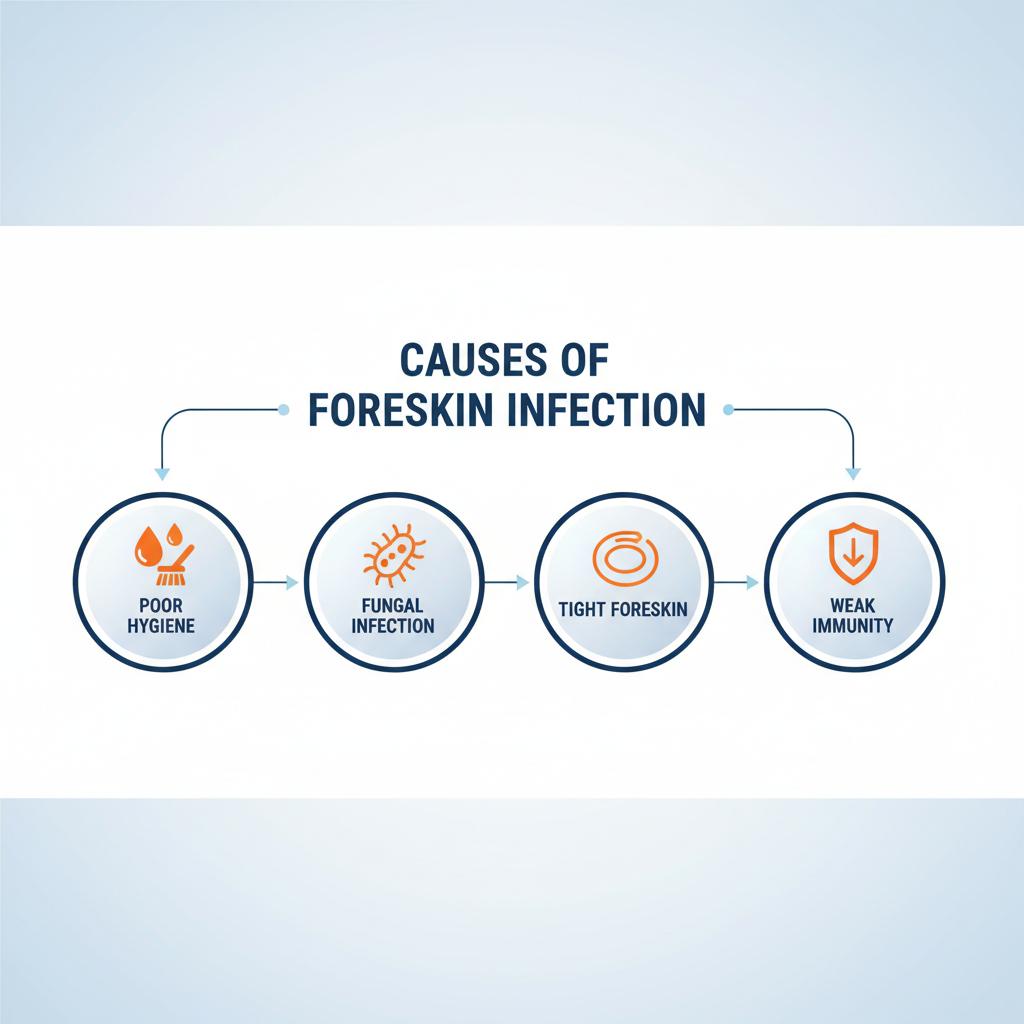
Ready to get the right care?
At-risk individuals for foreskin infection identified here.
Foreskin infections are more common in those with specific hygiene, health, or lifestyle conditions.

Males with intact foreskin
Moisture and bacteria build-up under the foreskin increase infection risk in uncircumcised men.

Individuals with diabetes
Elevated blood sugar levels foster fungal and bacterial growth, significantly raising foreskin infection risk.

Inadequate personal hygiene
Poor genital hygiene enables harmful microbes to flourish, leading to painful foreskin inflammation.

Adults engaging in sexual activity
Unprotected sex increases exposure to infections, causing foreskin irritation and swelling.

The Critical Phase
Immediate medical assessment is crucial for worsening symptoms. Early treatment effectively averts severe foreskin infection complications.
ALWAYS HOSPITALIZE HIGH-RISK PATIENTS
Foreskin Infection Complications: What You Should Know
Neglecting foreskin infections may result in severe penile and general health issues.

Phimosis danger
Repeated infections can scar, resulting in phimosis, a condition where the foreskin cannot be pulled back.

Sepsis danger
Untreated severe foreskin infections may lead to systemic infection, a life-threatening condition.

Tissue harm
Long-term inflammation can cause permanent tissue damage, impacting urinary and sexual health.
 MEDICAL ACCURACY
Identifying foreskin infection for proper treatment and management.
A urologist or physician conducts a detailed clinical examination of the glans penis and prepuce to diagnose balanitis or posthitis. This includes assessing symptoms like redness, swelling, and discharge. Patient history, hygiene, sexual activity, and conditions like diabetes or phimosis are crucial for accurate diagnosis. Diagnostic evaluation often involves physical assessment, swab cultures for pathogens, and STI screening if necessary. Blood glucose testing is recommended, especially for those with diabetes. In chronic cases, a skin biopsy may be needed to rule out other conditions. Early diagnosis guides effective treatment and prevents complications like phimosis and scarring.


STANDARD PROTOCOLS
Medical History and Clinical Examination
A thorough physical exam of the foreskin and glans, combined with a review of medical history, hygiene, and sexual health, helps identify risk factors for foreskin infection.
Microbiological Culture and Swab Analysis
Swab samples from the affected area undergo microbiological culture and sensitivity testing to identify pathogens, allowing for targeted antimicrobial treatment.
Metabolic Screening and Blood Tests
Blood glucose and HbA1c levels are assessed to identify diabetes, a common factor in recurrent foreskin infections, ensuring comprehensive long-term management.

Foreskin Infection: Treatment and Recovery Information
Explore effective treatments and recovery advice for foreskin infection relief.

Antifungal treatments
Effective topical antifungal or antibiotic creams for foreskin infections.

Oral antibiotics
High success rates with prescribed oral antibiotics for bacterial foreskin infections.

Consider circumcision
Recurring foreskin infections may warrant minimally invasive circumcision.


Advanced In-Patient Care
Effective treatment for severe foreskin infections is available through advanced laser-assisted techniques, allowing most patients to return to routine activities quickly.
 CRITICAL ALERT
Refrain from self-treatment. Unmanaged foreskin infections can escalate, necessitating sophisticated medical intervention.
 Avoid Self-Care
 Avoid Tight Clothes
 Seek Timely Care
Consult a professional before any medication.
Urgent action needed for foreskin infection treatment.
Prompt medical attention is crucial for severe foreskin infection to avoid complications.
 Emergency Hotline


Optimal prevention: safeguarding against foreskin infections.
Maintaining proper hygiene and prompt care effectively prevent foreskin infections.

Daily cleanliness
Daily cleaning under the foreskin helps remove bacteria and lowers infection risk.

Maintain dryness
Dry the area after bathing or urination to prevent fungal growth from moisture.

Adopt safe habits
Using protection during intimacy reduces the risk of sexually transmitted infections.

Early medical visit
At the first signs, consult a urologist to prevent symptom worsening.


Your health is our
sole priority.
Need Expert Medical Consultation?
Our network of Circumcision specialists are available for immediate clinical evaluation and personalized recovery planning.

Frequently Asked Questions
Infections of the foreskin arise from bacteria, fungi, or inadequate hygiene. Balanitis, a common condition, presents with inflammation, redness, and discharge. Prompt diagnosis and effective treatment are crucial for efficient symptom management.
Physicians assess symptoms and may perform swab tests or urine analysis. Accurate diagnosis identifies bacterial or fungal causes, allowing for targeted and effective treatment of foreskin infections, promoting faster recovery.